Worldschooling Materials That Earn Their Place in a Suitcase

Updated: Mar 7
I dream of one day joining a family or group of kids on their worldschooling adventure again. For now, I find myself living vicariously through the families planning their own journeys and offering guidance as they prepare. If you read my previous post, you know I believe this can be one of the most powerful ways to learn. As a teacher, it is hard to imagine a more exciting or rewarding format.

Of course, worldschooling also comes with some practical constraints. Suitcase space is limited, resources can be scarce or completely nonexistent depending on where you are traveling, and that makes your choices matter. You obviously cannot pack everything. You have to decide what earns its place. Ideally, the materials you bring are flexible, durable, and useful again and again in different contexts.
Some supplies are very age dependent. I would absolutely pack Wikki Stix or toothpicks for a kindergartener or first grader for example. Those kinds of materials get used constantly for early math, letter formation, and fine motor work. But they would mostly collect dust in the bag of an eighth grader.
But there are a few things I would recommend to any worldschooling family. They work across ages and earn their place in a suitcase. These are the materials I would pack again, no matter the ages of the learners.
Some of the resources below include Amazon affiliate links. If you purchase through them, I may earn a small commission at no extra cost to you.
In the sections below, I share a few specific materials I have found especially useful for supporting shared learning across ages and contexts while traveling. They are simple, durable, and adaptable. Most importantly, they support connection, observation, and reflection, which are at the heart of meaningful worldschooling experiences.
At the top of that list are field notes.
You could call it a journal, and functionally it's similar. But the name matters. Calling them field notes subtly shifts how kids see their role in the learning process. They are not just recording what happened or practicing handwriting. They are observers. They are documenting the world around them and making sense of it.
Field notes invite kids to process and reflect, while also creating a shared practice across ages. A child who cannot yet write can fill pages with drawings. An older child might add labels, captions, or diagrams. A teenager might sketch a street scene and annotate it with historical details, questions, or reflections. Adults can participate too, modeling curiosity and showing that learning does not stop when you leave school. These notebooks travel easily and adapt naturally as a child grows. And when you look back at them at the end of a trip, you'll see that growth clearly unfolding across the pages.
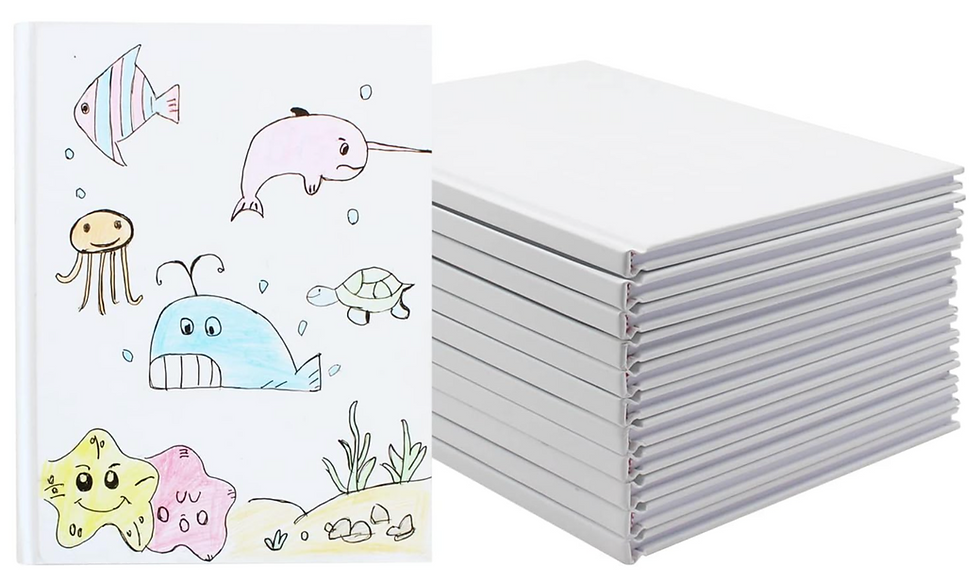
The 6×8 12-pack is what I like to use. I’ve ordered them again and again and easily recommend them.
Field notes can also become the foundation for something bigger. I strongly recommend pairing field note journaling with an ongoing family project that gives even more purpose to making sense of what you are learning while traveling. This might look like a shared newsletter, a simple website for close friends and family, a collective blog, or a video journal. These kinds of projects are incredibly motivating. They make reflection more meaningful, invite deeper processing, and create a shared sense of purpose without being restrictive. Everyone can follow their own interests, while still contributing to something tangible the family is building together. I have a lot more to say about this, and it’s something I plan to explore in a future post.
Adding Photographs to Field Notes
To add another layer to how experiences are documented, I like pairing the notebooks with a small portable photo printer.
Each field note day, kids could choose one photo to print, occasionally two at most. The limitation was intentional. Without it, time and energy tend to shift toward choosing photos, and the cognitive work that happens through selection, drawing, and synthesis gets exercised less. Limiting photo use to one or two images keeps the process fun while still supporting the kind of critical and creative thinking these notebooks are meant to encourage. Kids had to make deliberate choices about what was most useful to document visually and what could be better represented through drawing, writing, or diagrams.
Often, the photos captured things that were harder to draw accurately. The printed photo becomes a small sticker that goes directly into the notebook, where it can be captioned, labeled, or used as the center of a mind map, flowchart, or short narrative. This pushed kids to think more carefully about visual evidence and representation.

The printer is small, easy to pack, and simple to use. Paired with 2×3 inch sticker photo paper, it added depth to the field notes without replacing drawing or writing. Instead of relying on endless images, kids became better at telling stories with pictures, choosing what mattered, and using visuals intentionally to support their thinking.
This is a small addition that made the notebooks more dynamic, more thoughtful, and more fun to return to.
Reusable writing boards for thinking on the go
I call these rainbow boards, but online they’re labeled as LCD writing tablets. This is another tool that earned its place in our bags. They’re lightweight, durable, and incredibly useful for thinking through ideas without needing paper.

You'll use them constantly for planning, holding notes and thoughts, and working through problems. They were especially helpful for math, mapping out ideas, or sketching something quickly before deciding what belonged in a field notebook. Because everything can be cleared with a single button, kids felt free to try things out without worrying about mistakes.
I traveled with whiteboards as well, and those worked fine. But over time, we reached for the rainbow boards more often. They didn’t require markers, erasers, or cloths, and they were always ready to use. On a long trip, those small extras really add up.
One of the biggest surprises was how long the batteries lasted. Ours made it through an entire six-month trip without needing to be replaced. They lived in backpacks, were used almost daily by kids of different ages, and worked just as well at the end of the trip as they did at the beginning.
For worldschooling, they’re an easy, low-maintenance way to support planning, problem-solving, and creative thinking across age groups, while keeping packing light.
If you’ve done a worldschooling trip and found something that truly earned its place in your suitcase, I’d love to hear about it. Please share!


Comments