Worldschooling, what is it?

Updated: Jan 20

Worldschooling invites children to learn through the world itself, not just about it.
At its heart, worldschooling is experiential learning, learning that grows out of places, cultures, conversations, and daily life. Children are not just learning about the world, they are actively navigating it, noticing it, and asking questions because they are immersed in it.
A city becomes a living history lesson. A market turns into math. A hike becomes science, writing, and reflection. Learning feels relevant because it is happening in context, not in isolation.
This is why worldschooling is so special. Kids are naturally hooked. The learning of the day is new, interesting, and meaningful because it is connected to what they are seeing and experiencing firsthand. Curiosity drives the process, and academic skills are built through that curiosity.
Travel naturally puts us in learning mode; we absorb new things without even planning for it. But worldschooling takes that incidental learning and builds on it deliberately. It combines real-world experiences with structured reflection, meaningful connections, and purposeful instruction. The result? Measurable academic and personal growth.
It is a special kind of experience. It takes travel and intentionally bootstraps it for learning, turning what kids see and do out in the world into a school experience where learning and growth unfold in a meaningful way.
Why it Works
Travel naturally puts us in a state of curiosity. Everything feels new, and we pay attention in a different way. We slow down, notice more and take things in with fresh eyes. Kids do this too. They notice details, ask questions and begin to make connections without even trying. That mindset becomes a powerful foundation for deep learning.
Educators know that priming is an important step for learning to occur. Travel does this beautifully. It prepares kids to learn because they are already curious, engaged and tuned in. Worldschooling builds on that primed curiosity and uses it as the starting point for deeper, intentional learning.
In addition to growing their knowledge through worldschooling, families also see growth in:
adaptability
resilience
confidence
curiosity
the ability to act on their questions
a genuine love of learning 💚
Kids discover what they need in order to learn well. They learn how to adjust, how to stay engaged in different environments and how to take ownership of their learning.
Academically, kids continue to move forward. With thoughtful instruction, they stay on track with grade-level expectations and can even return ahead of their peers. Reading, writing and math feel more purposeful because everything connects to something real.
Common Myths
I often hear the same two misconceptions about worldschooling.
Myth 1: Worldschooling is only for wealthy families.
It can be expensive, but it doesn't have to be. The bigger factor is whether a family has the flexibility in their work life that allows for travel. When that flexibility exists, worldschooling can be more realistic than many people think. Worldschooling does not require a huge budget, but it does require the space in your life to make it happen.
Myth 2: Kids fall behind academically.
With consistency, intention and purposeful school time, kids absolutely do not fall behind. Many thrive because the learning is meaningful and connected to real experiences.
Commit to a Season
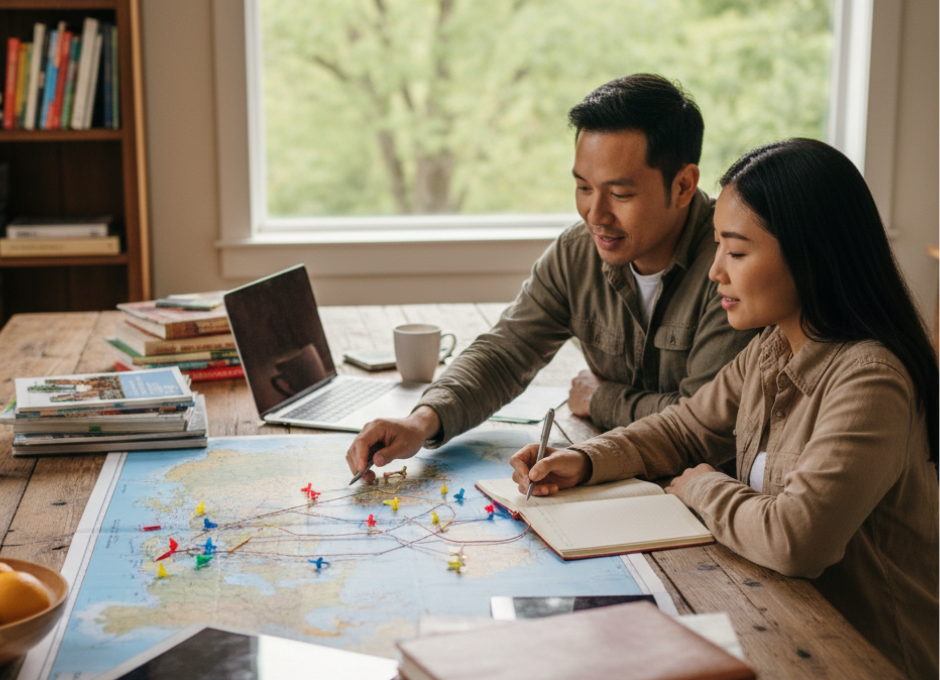
I recommend giving yourself a season and committing to worldschooling for three to six months. It takes time to find your rhythm, adjust your routine, and figure out how school and travel fit together. After that, things tend to click and you really begin to experience worldschooling at its best.
The structure that holds worldschooling together deserves its own explanation. In a future post, I'll focus on the daily routine that makes this lifestyle sustainable, realistic and successful for families.
Checklist: Are You Ready for Worldschooling?
This checklist is meant to help you reflect on what makes worldschooling work well and whether it feels like a realistic path for your family.
Worldschooling might be right for you if you:
enjoy travel
have some flexibility in your work or life schedule
want your child to continue growing academically
want to spark a real love of learning in your child
can commit to a daily school routine
will prioritize learning time even when it is inconvenient
value hands-on, real-world learning
want your child to develop resilience and adaptability
are comfortable planning travel logistics (or willing to learn)
can design learning or are open to support
like tying learning to lived experiences
can embrace learning right alongside your child
If these all ring true for you, it's time to commit to a season! Follow along as I share more tips and resources, or reach out directly if you'd like help planning. I love partnering with families to create meaningful learning experiences, and I'd be thrilled to help you design your worldschooling journey!
The Gift of Worldschooling

Worldschooling is one of the greatest gifts you can give your child. It lets kids see the world with open eyes, connect what they’re learning to real experiences, and discover that learning isn’t something that only happens at a desk. It happens everywhere. When kids explore new places, meet new people, and ask real questions that matter to them, they start to understand themselves as learners. They become curious. They take ownership. They grow.
Travel primes them for learning, and the intentional school time brings depth. Together, they create a kind of learning that is hard to replicate anywhere else. Kids learn to adapt, to observe closely, to make sense of what they see and to act on their questions. They stretch themselves academically because everything connects to something meaningful and real. And along the way, they grow in confidence, resilience and independence.
It is one of the most immersive and meaningful ways I know for kids to learn.
More than anything, worldschooling expands a child’s sense of what is possible. It shows them how much there is to be curious about, how much there is to learn, and how the world itself can become a source of inspiration, challenge, and growth.
If you can create the space in your life for worldschooling, it has the power to reshape the way your child sees the world and what they believe they are capable of. It brings learning to life in a way that is joyful, intentional and deeply human. It is an experience that stays with them long after the trip is over and one that can significantly shape how they see the world and themselves.
Worldschooling is not just travel and it is not just school. It is a way of learning that helps kids fall in love with the world and with learning itself, and it invites you to grow alongside them. That is a gift that lasts a lifetime.


Comments